

Flamingo ApplianceSeptember 9, 2026 · Refrigerator Repair
Your Sub-Zero undercounter ice maker (model DE50I) is running, but the bin is empty, low, or filling far slower than it used to. This is a standalone unit with its own sealed refrigeration system and an air-cooled condenser, so the causes are different from an ice maker built into a fridge.
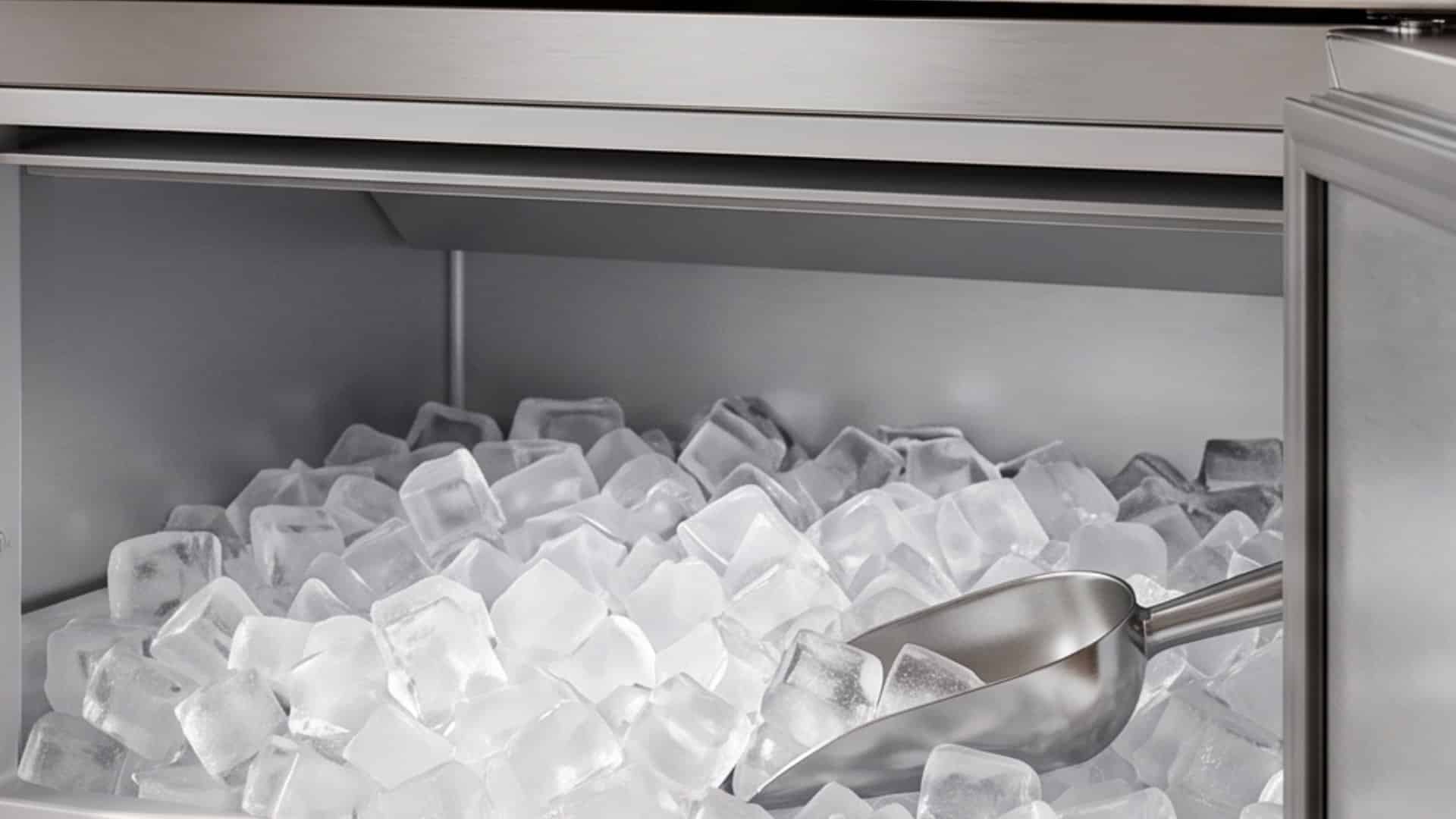
One thing to understand up front: the bin on these units is insulated, not refrigerated. Sub-Zero makes clear ice by continuously melting a little of it, which is what gives you those clean, restaurant-style cubes. That also means ice will melt faster if the unit sits in a warm room or direct sunlight. Some “low ice” calls are really just this normal behavior in a hot spot.
There are two versions of this complaint, and telling them apart helps:
No ice at all. The unit powers on but never drops cubes. This usually points to water supply, the drain, a cleaning issue, or a failed part.
Low ice, small cubes, or cloudy ice. It makes some ice, but not enough or not clear. This almost always points to a dirty condenser, scale buildup, low water flow, or a unit that needs cleaning and sanitizing.
Work through the checks below in order. The first several are safe to do yourself. Anything involving the sealed refrigeration system, the water inlet valve, or internal parts is best left to a technician.
Start Here: Time, Water, Drain, and Cleaning
Give it 24 hours. After startup, a power loss, or being turned off, these units need up to 24 hours to stabilize before they cycle normally. If you just switched it on, wait a full day before assuming anything is wrong.
Confirm it is on and not delayed. Check that the ice maker is actually switched on, and that any delay or scheduling function has not been left active, which pauses production.
Check the water supply. Confirm the shutoff valve feeding the unit is fully open. The shutoff is often under the kitchen sink, behind an adjacent cabinet, or near a home water filtration system. Look behind the unit for a kinked or crushed supply line and straighten it.
Check water pressure. Low pressure is a common cause of low ice, small cubes, or hollow cubes. A quick test: pour a cup of water behind the ice maker’s water curtain. If the spray pattern changes, the unit is not getting enough water. Homes on reverse osmosis or well water sometimes need a pressure booster or regulator, which a plumber can advise on.
Use a genuine Sub-Zero water filter. If your setup uses one, replace it every 6 to 12 months. Third-party filters are not tested to Sub-Zero specs and can quietly choke production.
Check the drain (pump models). On DE50I units with a drain pump, make sure the drain line runs without kinks or loops. A blocked drain can slow or stop ice.
Clean and sanitize the unit. This is the big one. These ice makers need regular cleaning and sanitizing with Sub-Zero’s own ice maker cleaner and sanitizer, not vinegar or a generic cleaner. Skipping this leads to scale, cloudy or slushy ice, and dropping production.
Clean the air-cooled condenser. A dirty condenser is one of the most common reasons for low or no ice. On undercounter units the condenser sits behind the lower grille. With the power off, remove the grille and vacuum the condenser with a soft brush attachment every 6 to 12 months, more often in a dusty or pet-heavy home.
Check placement, level, and airflow. Keep the room around 70°F and the unit out of direct sunlight, with clearance for airflow. Make sure it is level and the bin is seated properly, since on some models the bin position matters for the unit to run.
Thaw a frozen fill tube. If the water fill tube is frozen, ice stops. Clear the blockage, then turn the unit off and back on to reset it.
Use stable household power. These units should run on standard household power, not a generator, since voltage swings affect operation.
If water, drain, cleaning, condenser, and placement all check out and the unit still will not make ice, the cause is likely a component.
Common Component Causes (Professional Territory)
These involve the electrical or sealed refrigeration system and are best diagnosed by a technician experienced with Sub-Zero.
Water inlet valve. This electrically operated valve lets water in each cycle. If it fails, the unit will not fill. A technician unplugs the unit, tests the valve for continuity, and replaces it if needed.
Blocked spray nozzles or scale. Heavy scale or blocked spray nozzles can leave the unit running without producing a proper slab of ice. This ties back to overdue cleaning and sanitizing.
Bin thermostat. On these units a bin thermostat controls the cycle. If it is out of adjustment or failing, production can stop or run inconsistently.
Sealed system or condenser fan. If the condenser fan is not turning or the sealed system is not shedding heat, the evaporator cannot freeze water cleanly. This shows up as little ice, thin or cloudy ice, or none at all.
Control or sensors. Less common, but a control or sensor fault can stop the cycle or misread conditions. A technician can read the unit and pinpoint it.
Common Mistakes to Avoid
Skipping cleaning and sanitizing. An overdue cleaning is one of the top causes of low or cloudy ice, and no part swap will fix it.
Ignoring the condenser. A dust-clogged condenser cannot shed heat, and ice output falls.
Blaming the unit for melting ice. If the ice maker sits in a hot or sunny spot, faster melting is normal, not a fault.
Using third-party filters or generic cleaners. Both can hurt performance. Stick with genuine Sub-Zero filters, cleaner, and sanitizer.
Opening the sealed system yourself. Refrigeration work requires training and equipment, and doing it wrong can be dangerous.
When to Call Flamingo
Bring in a professional when:
You have checked the timing, water supply, pressure, filter, drain, cleaning, condenser, and placement, and it still will not make ice.
The water inlet valve, bin thermostat, condenser fan, or sealed system needs testing or replacement.
Ice is consistently thin, cloudy, or slushy after a full clean and sanitize.
Flamingo Appliance Service has repaired high-end kitchen appliances across South Florida and Georgia for over 30 years, including Sub-Zero, Wolf, and Cove. Our team of 120-plus technicians runs about 15,000 service calls a month, completes over 100 hours of training a year, and uses parts sourced only from the manufacturer or authorized distributors, backed by a one-year parts warranty.
One honest note on warranty: Sub-Zero backs the DE50I with a two-year manufacturer warranty from the date of installation. Flamingo is an independent service company and is not a Sub-Zero factory-authorized provider, so if your unit is still inside that window, confirm your coverage first, since work by a non-authorized shop can affect it. Once you are out of warranty, we are an experienced, well-stocked choice to get it diagnosed and making ice again.
Ready to get the ice flowing again? Schedule service online, call (877) 560-8485, or text (754) 345-5121.
Quick Checklist Before You Call
Unit running for a full 24 hours since startup or power loss?
Ice maker switched on, with no delay function active?
Water shutoff fully open, supply line free of kinks, pressure good?
Genuine Sub-Zero filter replaced within 6 to 12 months?
Unit cleaned and sanitized with Sub-Zero cleaner, condenser vacuumed?
Unit level and bin seated, room near 70°F, out of direct sun, with airflow?
If all of those check out and the unit still will not make ice, a component needs a professional.
Frequently Asked Questions
Why is my Sub-Zero ice maker making little or no ice? The most common causes are an overdue cleaning or a dirty condenser, low water flow from a closed valve, kinked line, or clogged filter, and a warm or sunny installation spot. Start with those, and give the unit 24 hours to stabilize before assuming a part failed.
Why is my ice cloudy, small, or hollow? Cloudy or scaly ice usually means the unit needs cleaning and sanitizing or the condenser needs vacuuming. Small or hollow cubes usually point to low water pressure. Run a full clean and sanitize cycle with Sub-Zero’s cleaner, then check pressure.
Why does the ice keep melting in the bin? The bin is insulated, not refrigerated, which is how Sub-Zero produces clear ice. Ice naturally melts over time, faster in a warm room or direct sun. Keep the unit around 70°F and out of sunlight.
How often should I clean it? Clean and sanitize on the schedule in your Use and Care guide, and vacuum the air-cooled condenser every 6 to 12 months, sooner in a dusty or pet-heavy home.
Does water pressure matter? Yes. Low pressure can stop the unit from filling and produce small or hollow cubes. Reverse osmosis and well systems sometimes need a booster or regulator.
Can I fix this myself? You can safely handle the water supply, filter, drain, cleaning, sanitizing, condenser, leveling, and placement. The water inlet valve, bin thermostat, and sealed system involve electrical or refrigerant work and are best left to a technician.
For Sub-Zero’s own steps, see the manufacturer’s undercounter ice maker troubleshooting guide. For anything past the basic checks, Flamingo Appliance Service will get your DE50I diagnosed and making ice again.